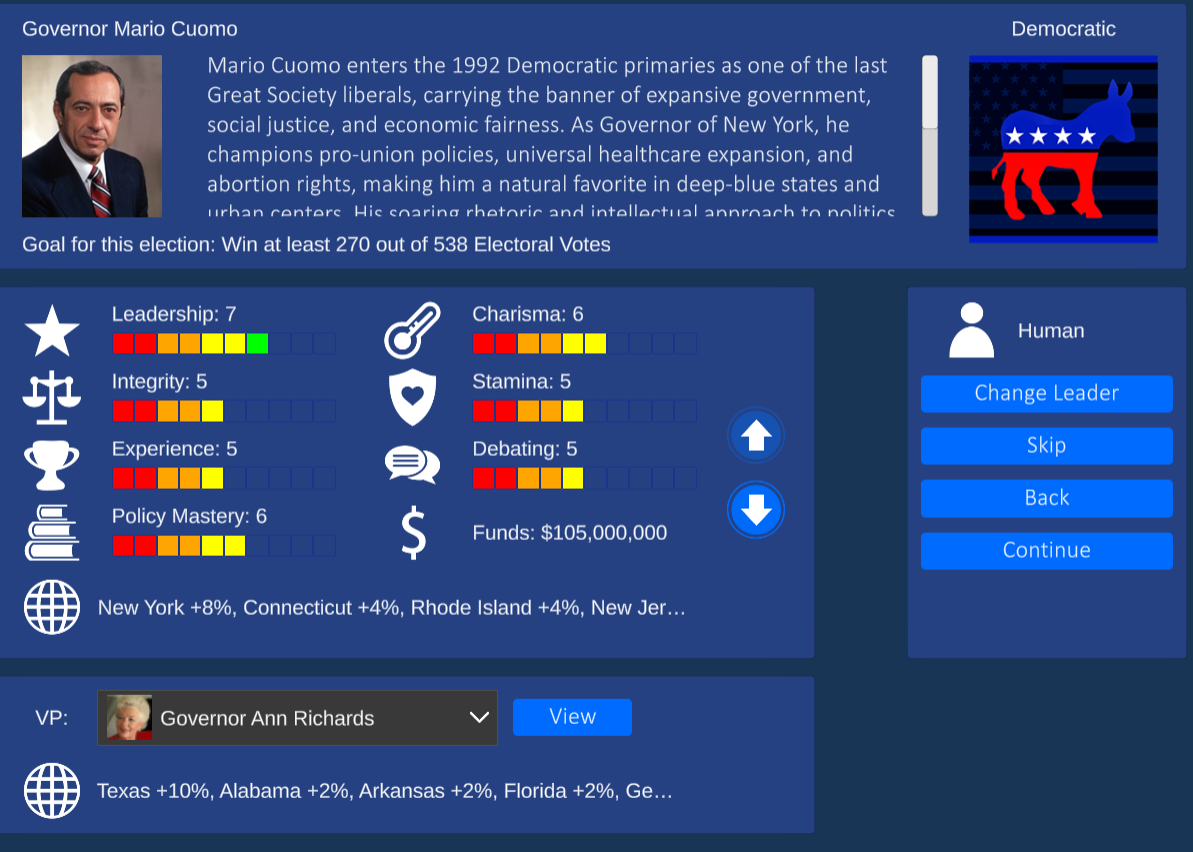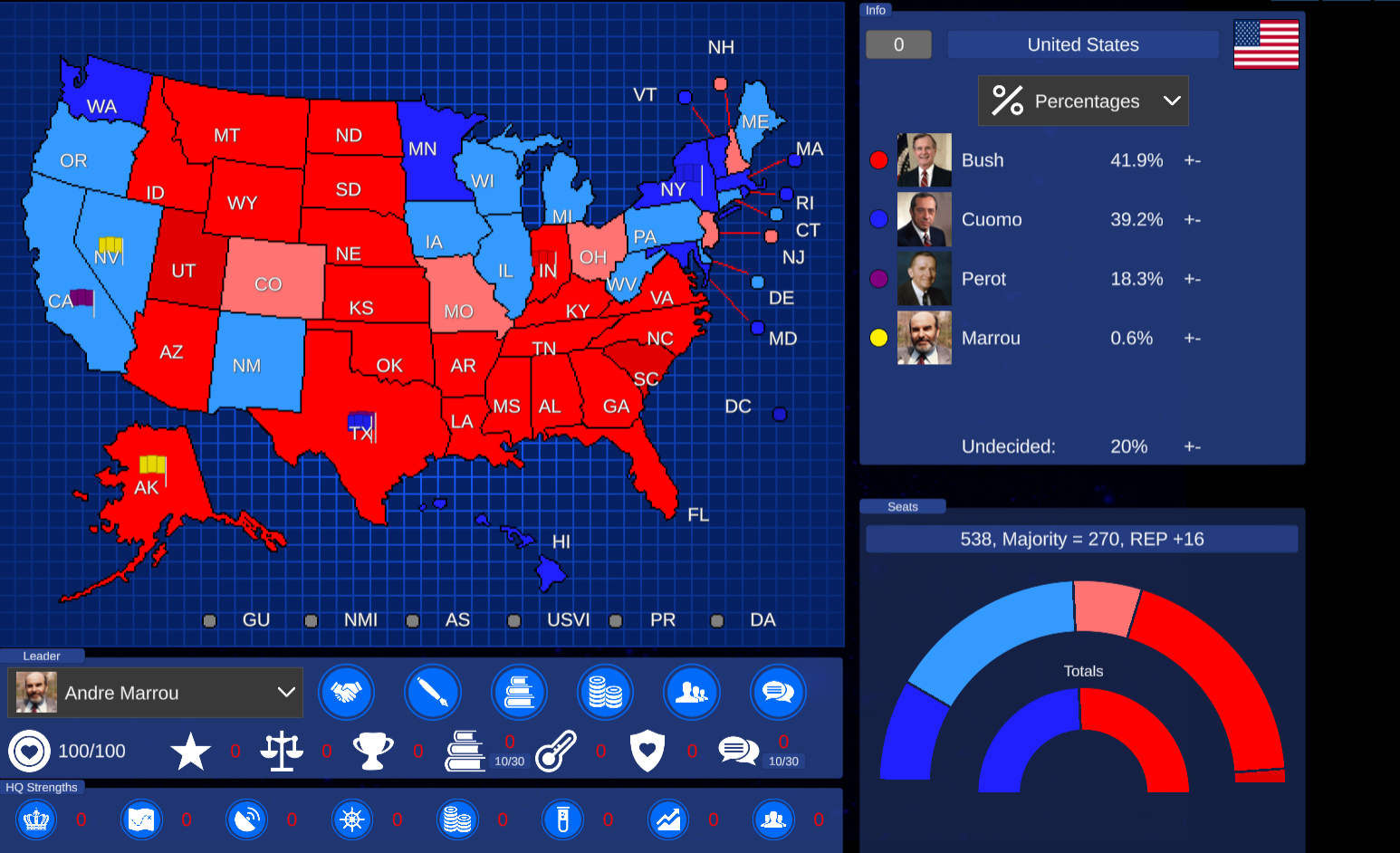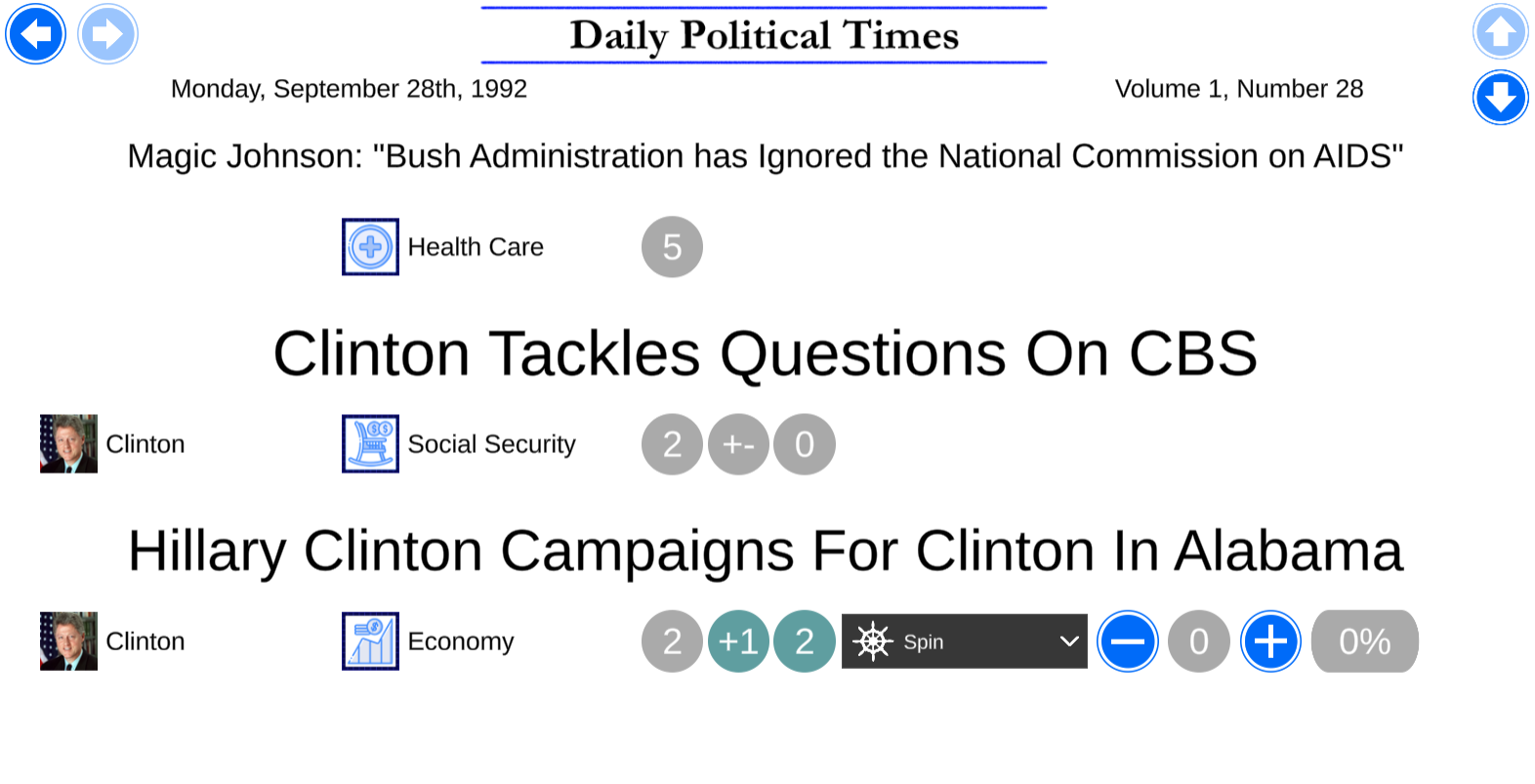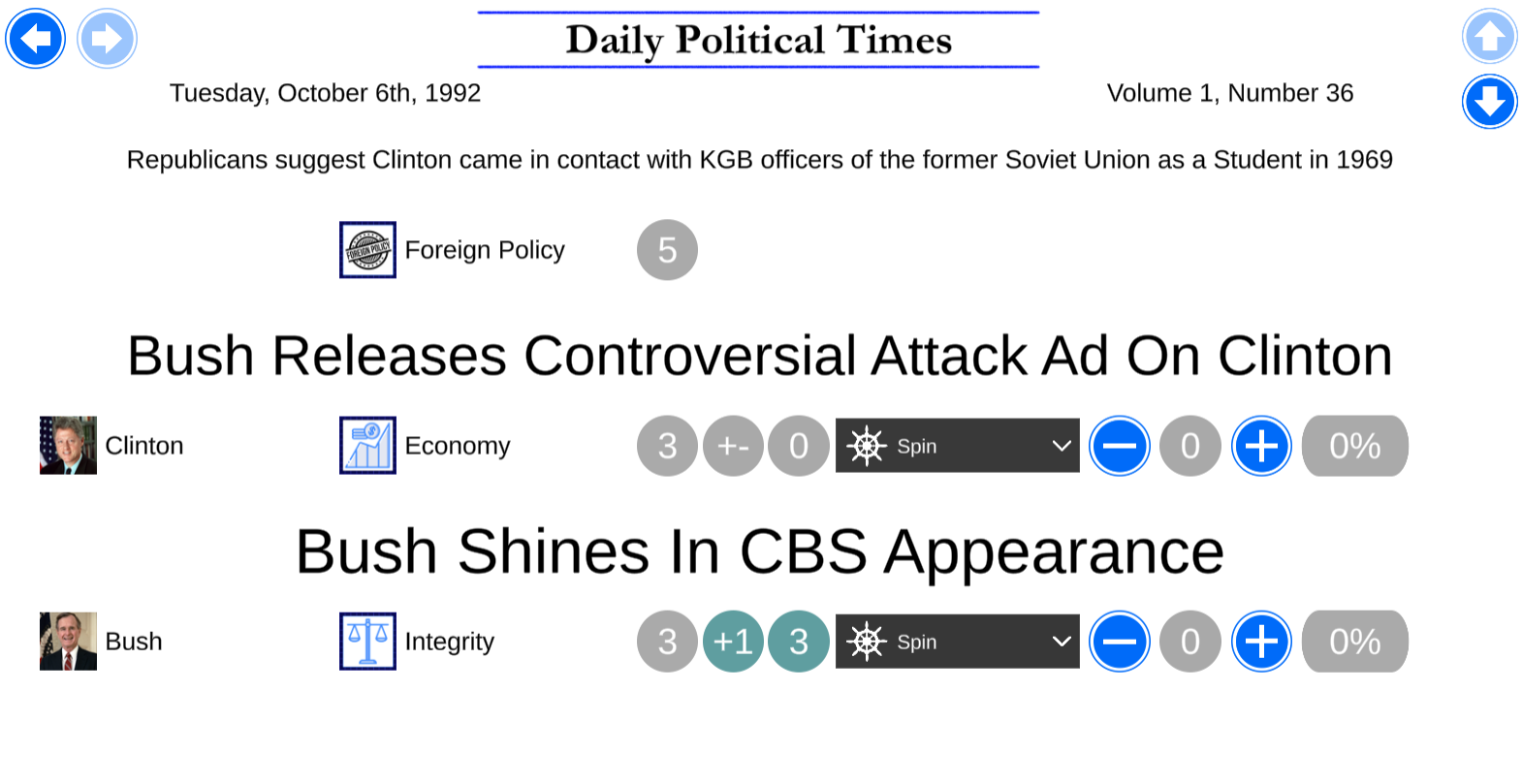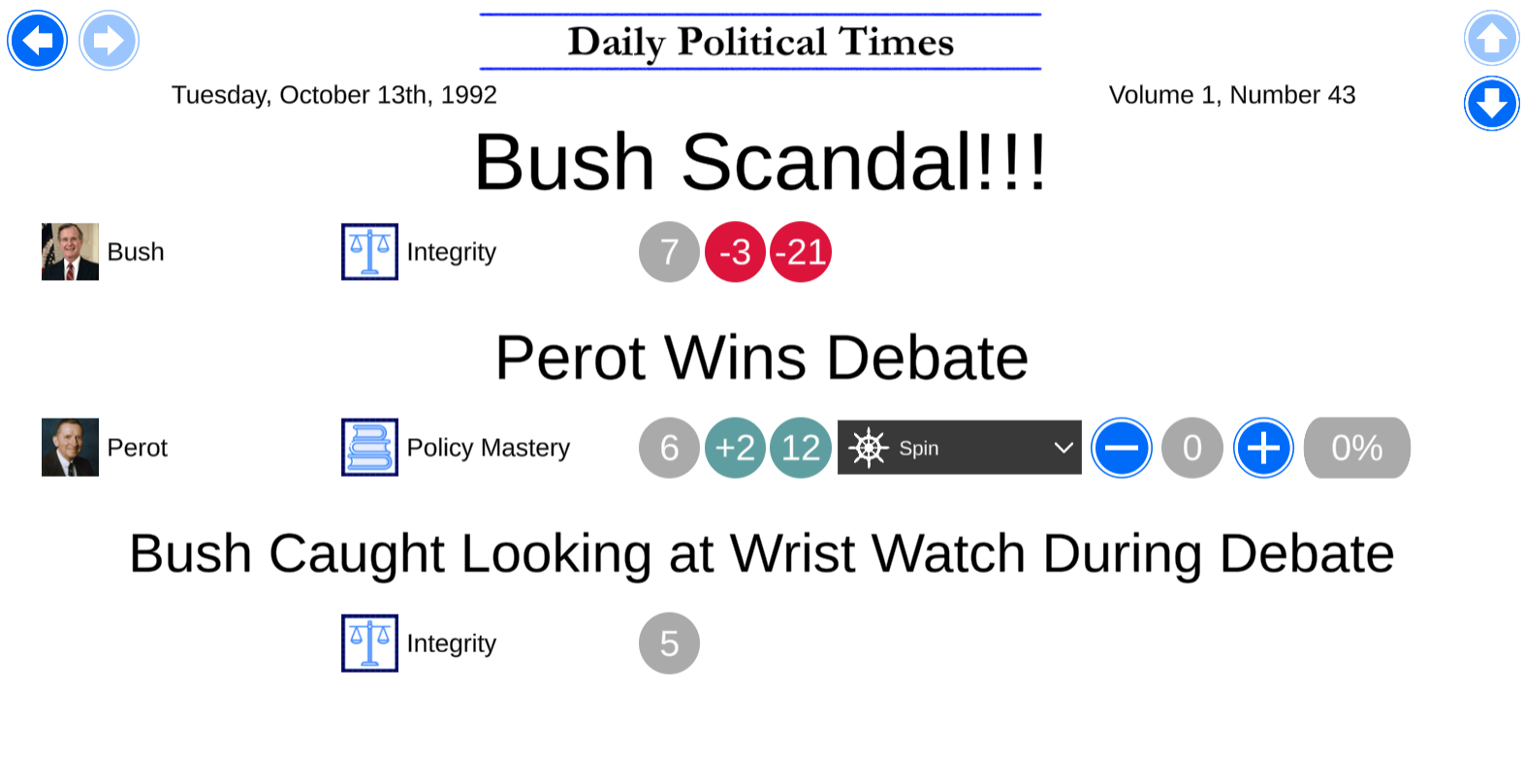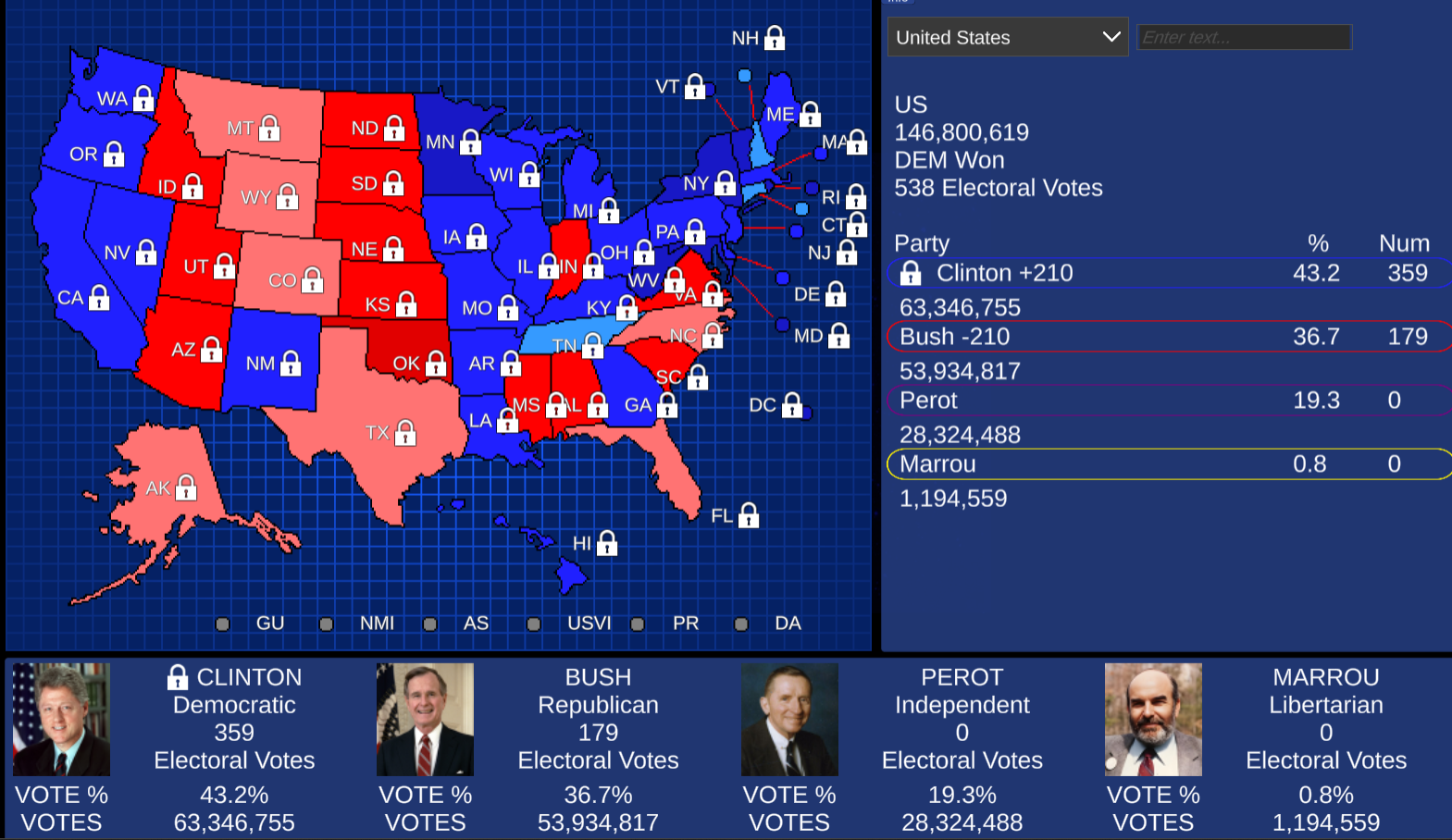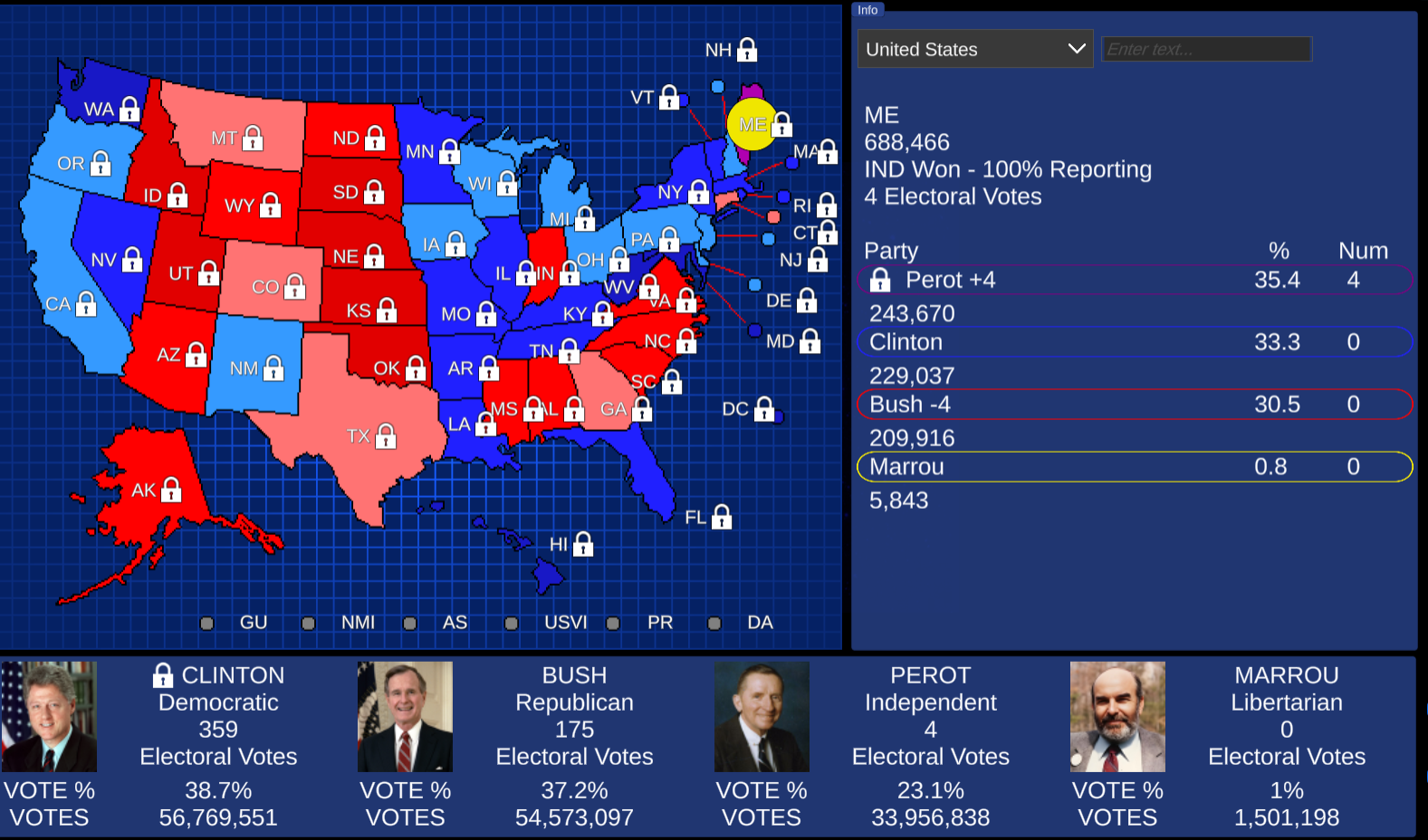
1992 – Bush vs Clinton vs Perot

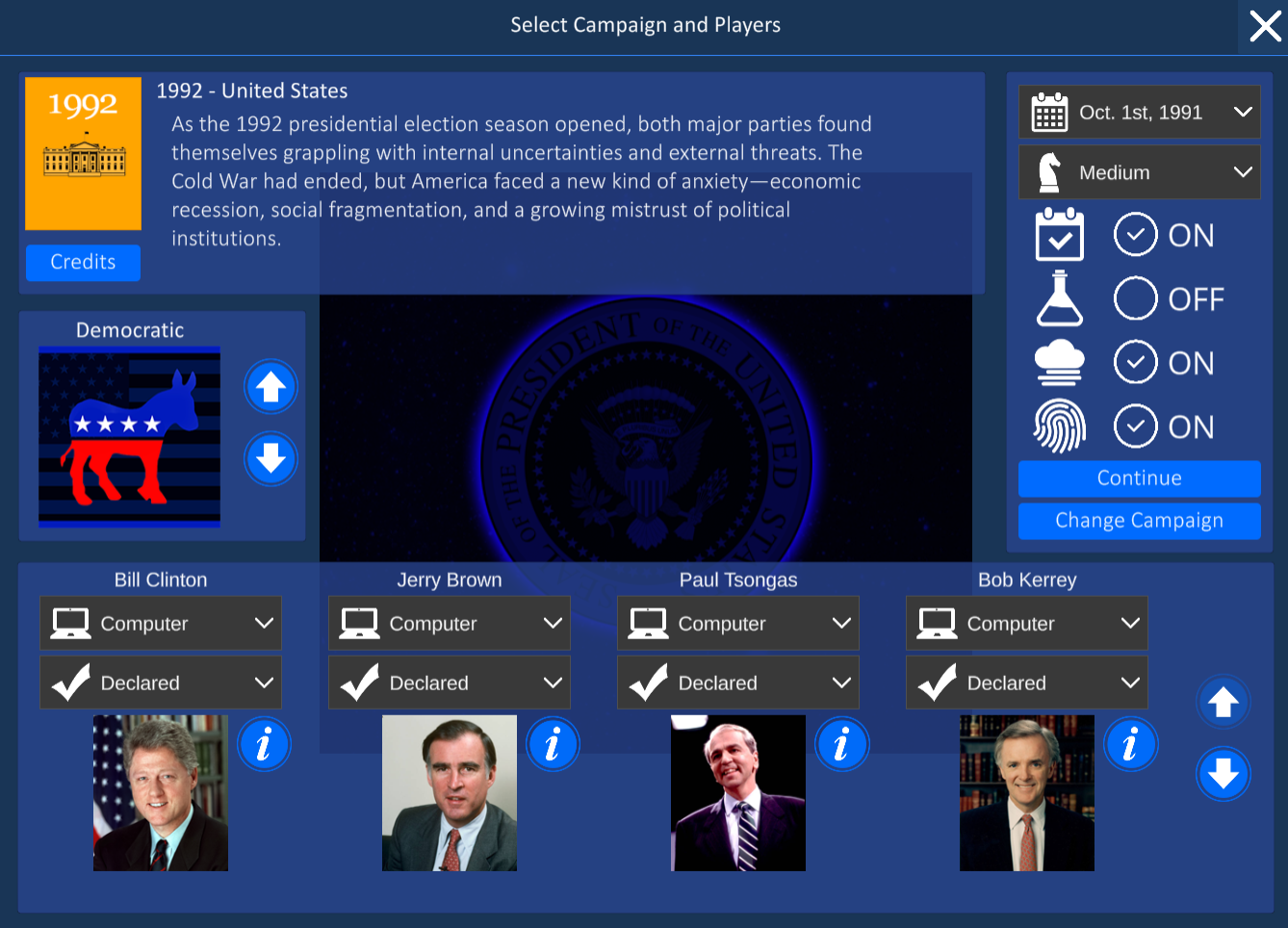
The 1992 U.S. presidential election begins as what many assumed would be a straightforward re-election campaign for President George H. W. Bush, whose popularity had soared to historic highs—reaching nearly 90% approval—after the successful conclusion of Operation Desert Storm and the collapse of the Soviet Union. Bush had presided over a foreign policy triumph that reasserted American power on the world stage and ushered in what many saw as a unipolar moment of U.S. dominance. Few doubted his chances for a second term.
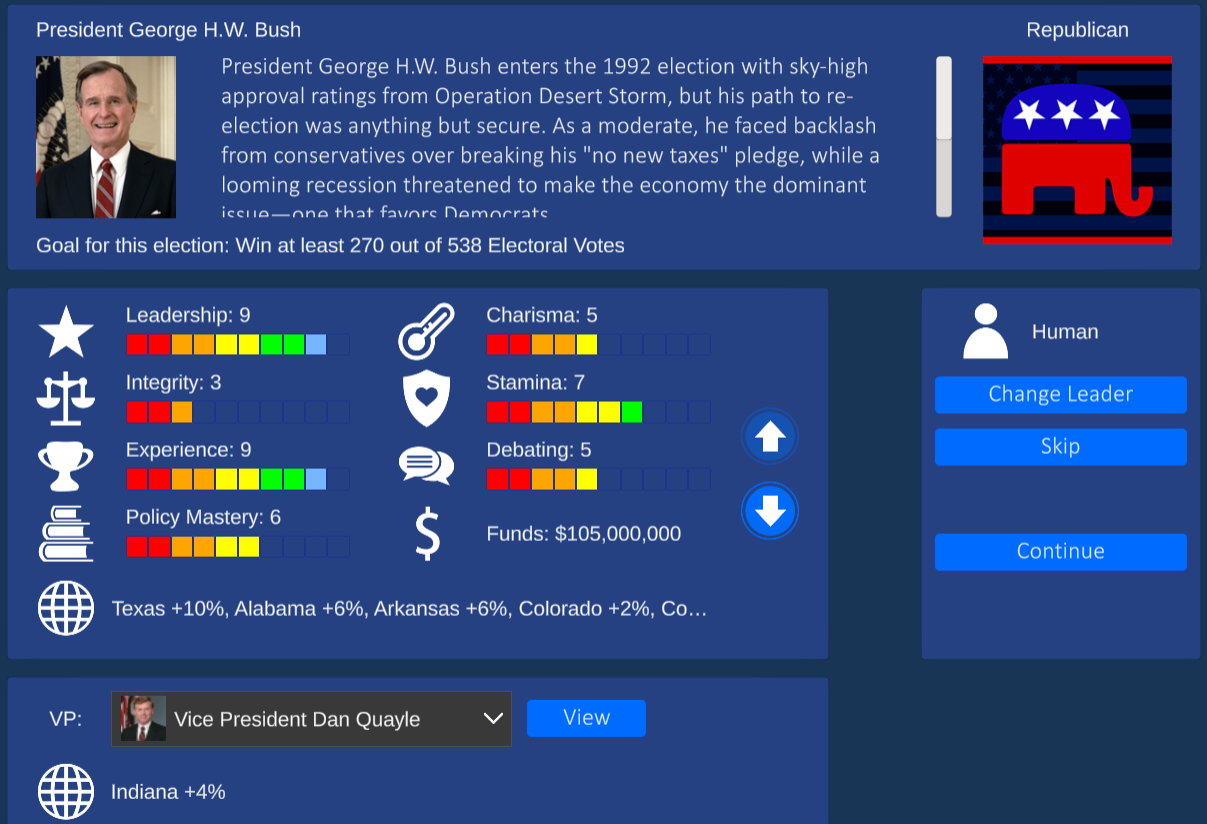
But the domestic situation told a very different story.

By late 1991 and into 1992, the U.S. economy had slipped into recession, with rising unemployment and stagnant growth. Voters’ attention shifted from foreign affairs to pocketbook issues, and the glow of Bush’s Gulf War success began to fade. Adding to his vulnerability was his 1990 decision to break his famous “Read my lips: no new taxes” pledge—an act seen by conservatives as a betrayal and by moderates as ineffective. Bush now faced the difficult choice of how to define his political identity: would he double down as the pragmatic moderate who raised taxes to deal with the deficit, or pivot sharply to the right and stoke the culture wars in a bid to shore up the GOP base?
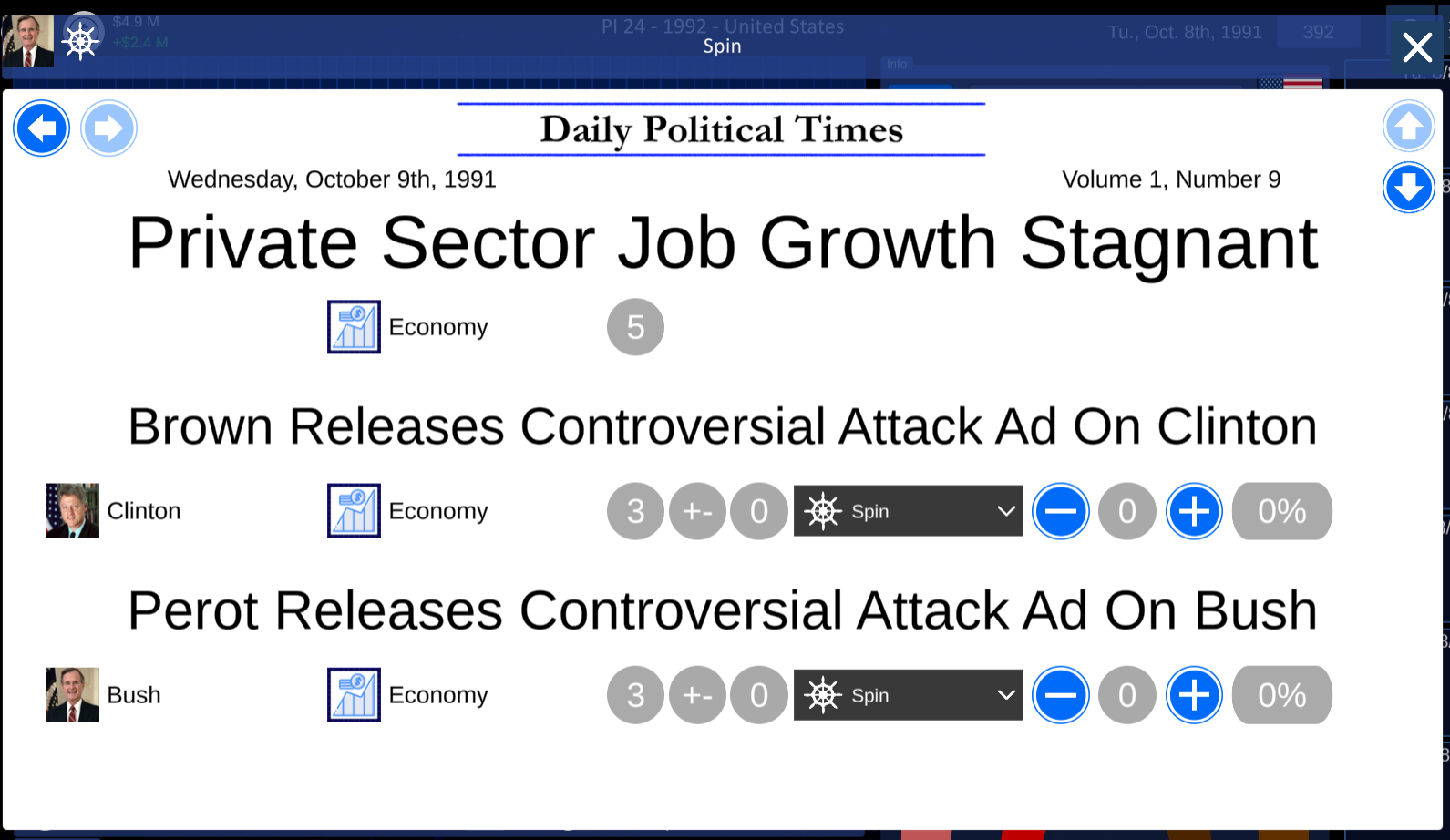
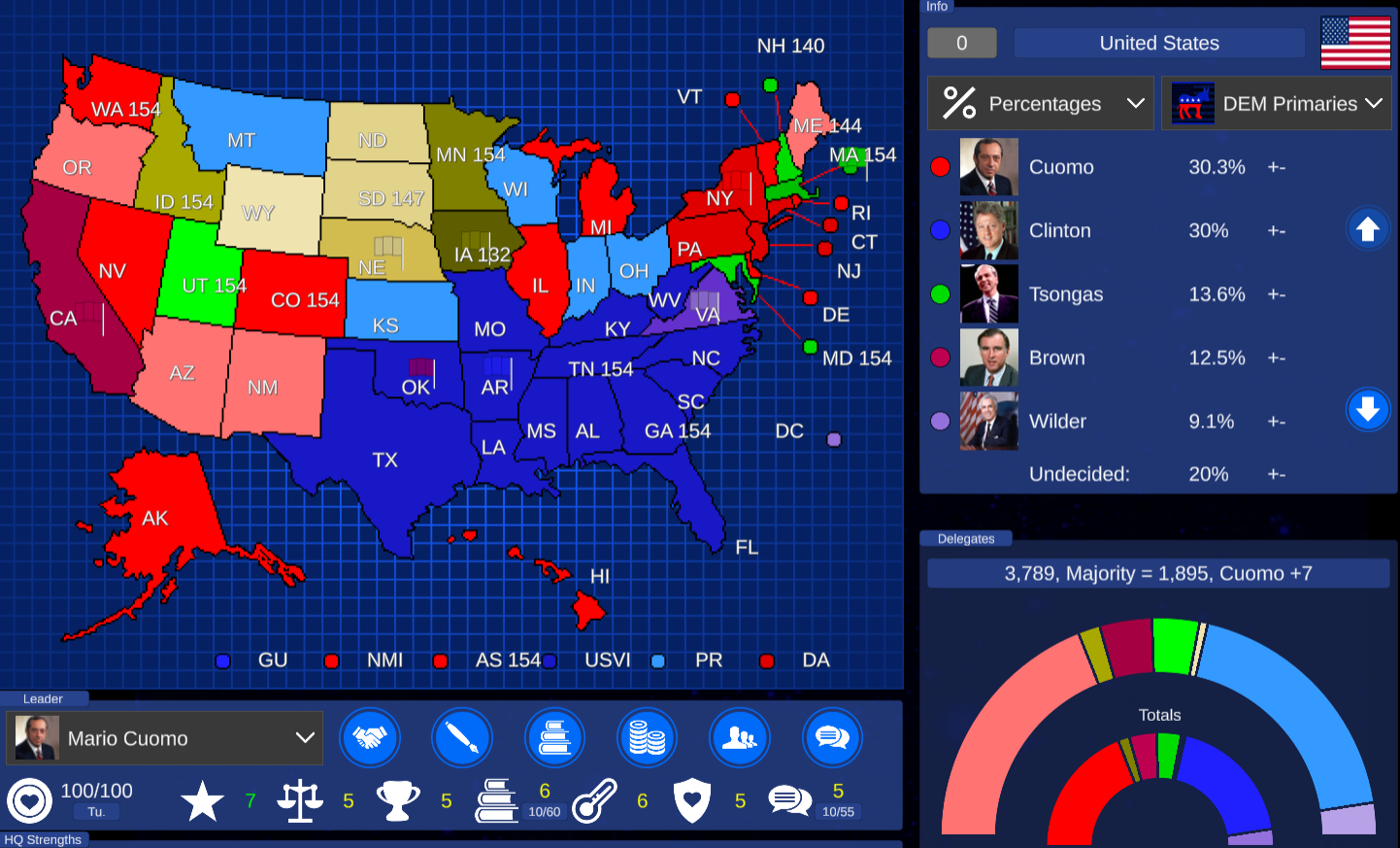
For Democrats, the shift in economic mood opened an unexpected door. Initially, many big-name Democrats declined to run, convinced that Bush’s towering approval ratings made 1992 unwinnable. Into that vacuum stepped a relatively unknown governor from Arkansas, Bill Clinton, who would soon surprise the political world by emerging as a charismatic, energetic campaigner with a focus on the economy—“It’s the economy, stupid”—and an ability to triangulate between traditional liberalism and emerging centrist themes.
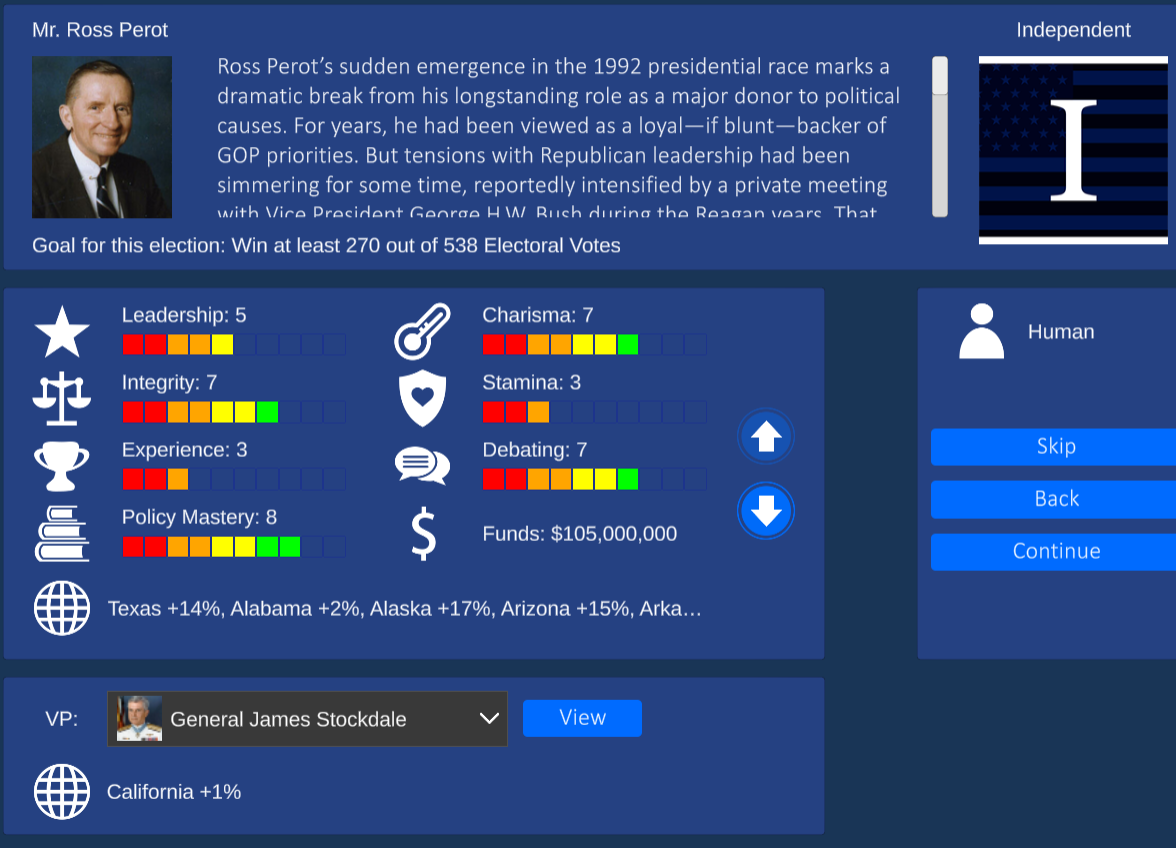
Meanwhile, the wild card of the race is Ross Perot, a Texas billionaire and self-financed independent candidate who tapped into a rising wave of public frustration with both parties. Perot’s message about the national debt, trade imbalances, and political dysfunction resonated with a broad spectrum of voters. At one point in the spring of 1992, Perot led both Bush and Clinton in national polls. Though he temporarily dropped out in July—only to re-enter the race later in the fall—his insurgent candidacy showed how volatile the electorate had become.
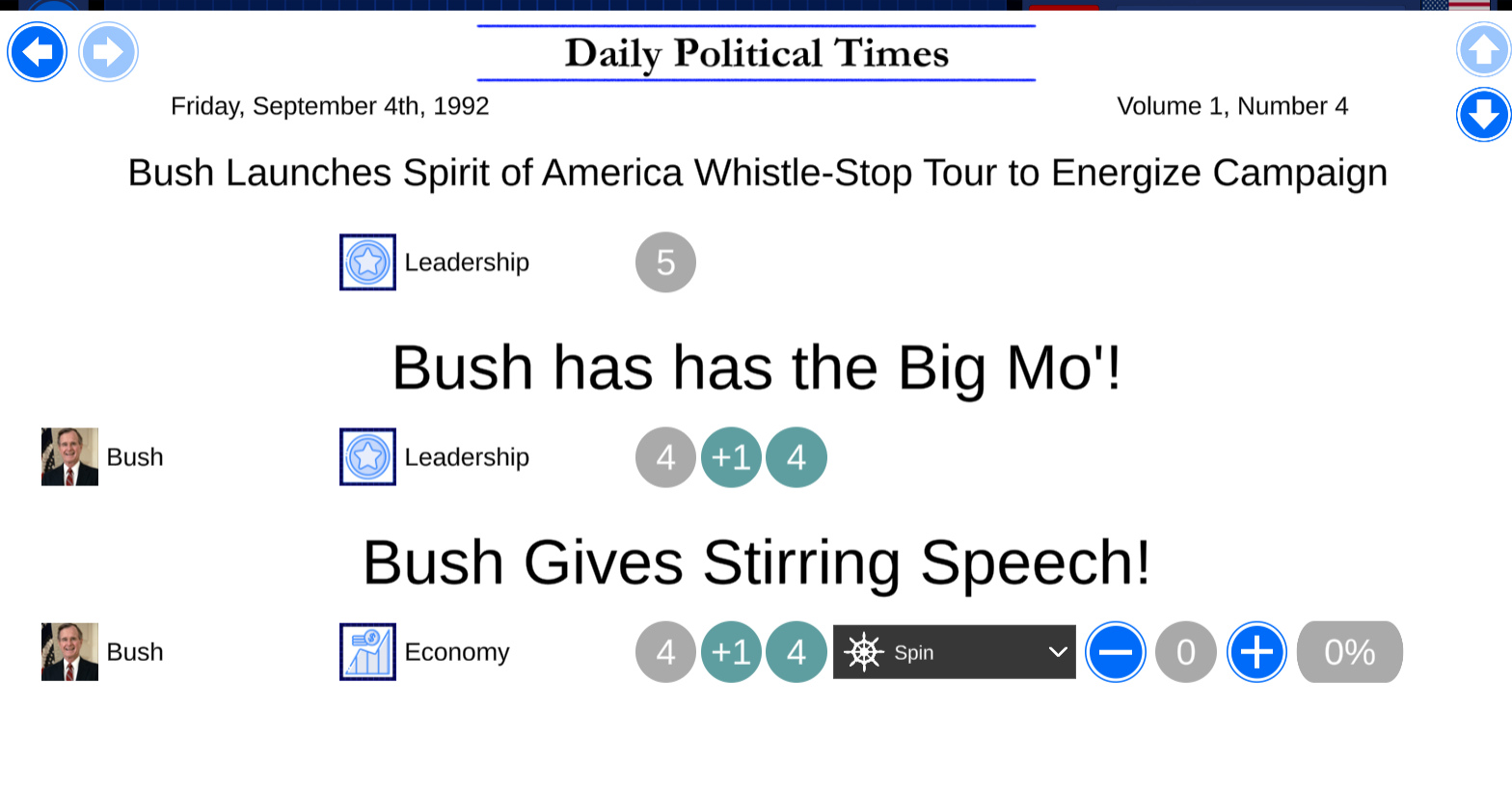
Now, heading into the general election, the 1992 race is anything but predictable. Bush is wounded but still formidable, Clinton is rising with momentum and a modern campaign apparatus, and Perot lurks on the sidelines, capable of jumping back in and upending the race again. With a faltering economy, ideological divisions within the Republican Party, and a Democratic Party trying to redefine itself for a post-Cold War America, the election is wide open. Anything can happen.
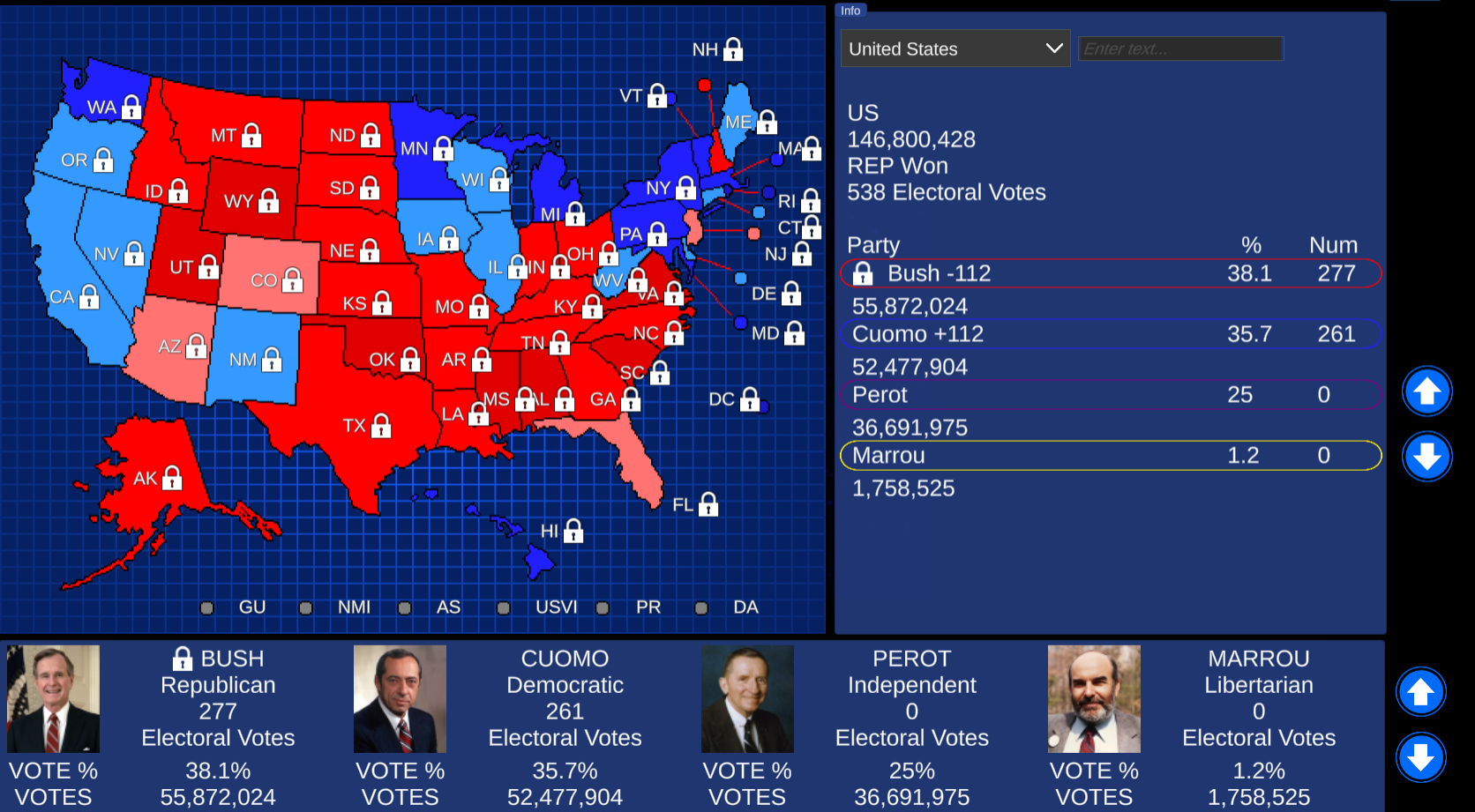
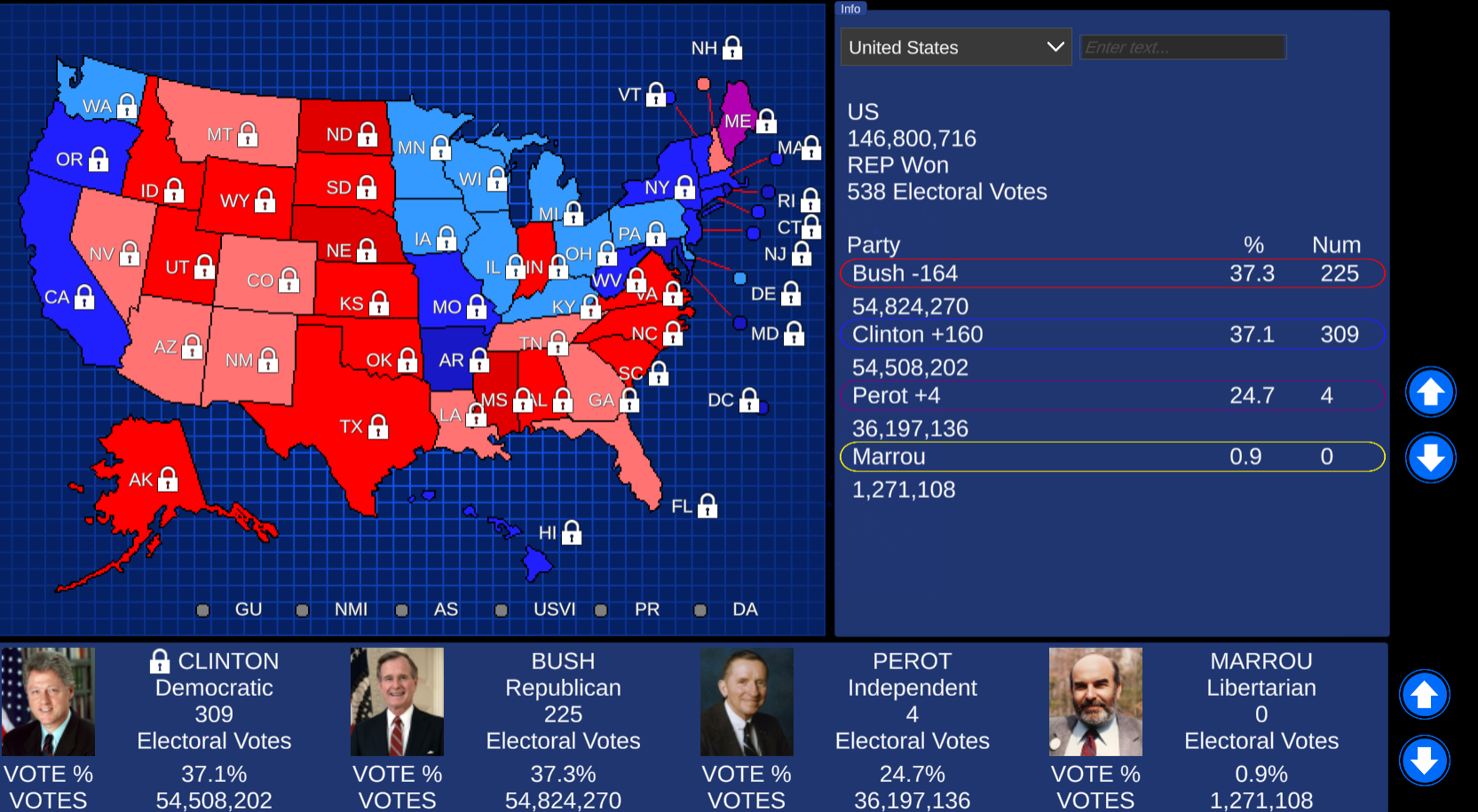
Download: https://www.mediafire.com/file/mellv92exyrp0no/United+States+-+1992.zip/file

1976 – The Year of the Outsiders

The United States is in turmoil. Inflation is soaring at 9%, unemployment is high, and the economy is stagnant—a phenomenon dubbed stagflation. President Gerald Ford, having never been elected to the presidency or vice presidency, struggles to gain legitimacy after pardoning Richard Nixon, a move that enrages the public. His approval ratings are dismal, and his attempts to curb inflation with initiatives like Whip Inflation Now (WIN) fail to gain traction. The nation is restless, looking for change.

The Battle for the Republican Party – Ford vs. Reagan

Despite being the incumbent, Ford faces a fierce primary challenge from former California Governor Ronald Reagan, who portrays Ford as weak and insufficiently conservative. Reagan excites the party base but struggles with moderate and liberal Republicans who see him as too radical. Ford ultimately edges out Reagan at the Republican National Convention, but at great cost—he alienates many conservatives.

What If Ford Picked Rockefeller Instead of Dole?

  • Vice President Nelson Rockefeller, a liberal Republican, would have helped Ford in states like New York, potentially flipping it to the GOP.
    • However, conservative strongholds like Virginia and Oklahoma might have defected due to Rockefeller’s association with big government policies.
    • The electoral map could have flipped, leading to a narrow Ford victory over Carter.

What If Reagan Had Won the GOP Nomination?

  • Liberal Republicans, fearing Reagan’s conservatism, might have bolted the party and backed Carter.
  • Reagan’s appeal in the South and West could have offset Carter’s strength, but the loss of Northeastern moderates might have sunk him.

The Democratic Primary – Carter, Jackson, Brown & Wallace

The Democratic field is crowded. Jimmy Carter, the former governor of Georgia, presents himself as a Washington outsider, capitalizing on voter distrust of the political establishment. His strategy works, allowing him to edge out opponents like:

  • Henry “Scoop” Jackson, a hawkish Cold War Democrat.
  • Mo Udall, the progressive environmentalist.
  • George Wallace, the Southern populist who appeals to white working-class voters.
  • Jerry Brown, Fiscal moderate with a focus on environmentalism, and a more decentralized government.

What If Henry Jackson Had Won Instead of Carter?

  • Jackson’s strong anti-communist stance could have won over blue-collar voters.
  • However, Carter’s Southern strategy would have been absent, making the South more competitive for Ford.

What If Ted Kennedy Had Run in 1976?

  • A Kennedy candidacy would have electrified the Democratic base, uniting liberals.
  • However, his Chappaquiddick scandal (1969) remained a liability.
  • Kennedy could have faced a closer race with Ford, especially among moderates skeptical of a liberal dynasty candidate.

Election Night 1976 – A Narrow Carter Victory

In reality, Carter won by portraying himself as an honest, small-town Southerner against the tainted Ford administration. But in a year of political upheaval, one or two changes could have rewritten history.

Would a different VP pick have saved Ford? Would Reagan have pushed the GOP to an early conservative revolution? Could Kennedy have rewritten history four years earlier?

Download: https://www.mediafire.com/file/2ltzsmxbw6j8zc8/United_States_-_1976.zip/file

Please continue to support 270sims and let me know in the comments if you want anything added and or if there’s anything that needs to be fixed.